

Gendered insights into food security among Vietnamese rice-shrimp farmers – about the thesis of Guada Babilonia
Where salt meets fresh
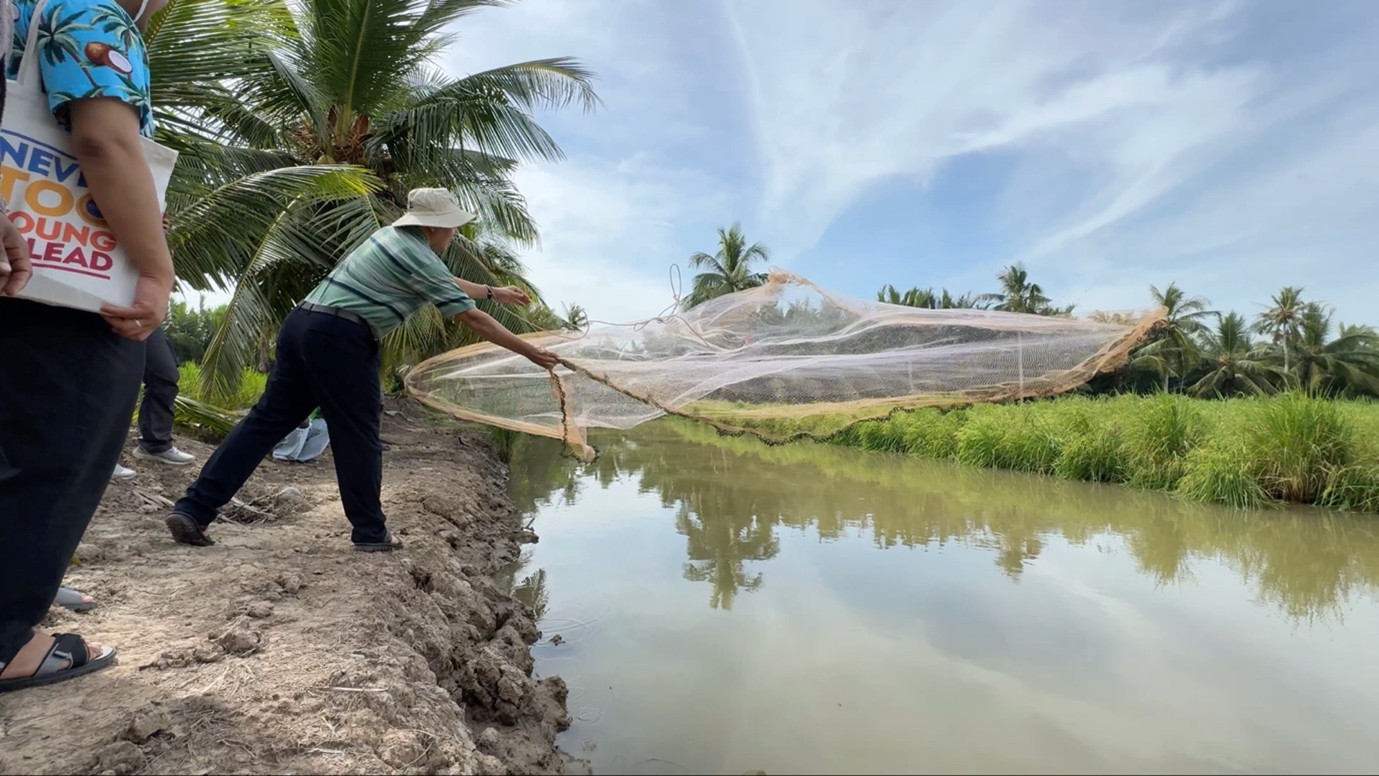
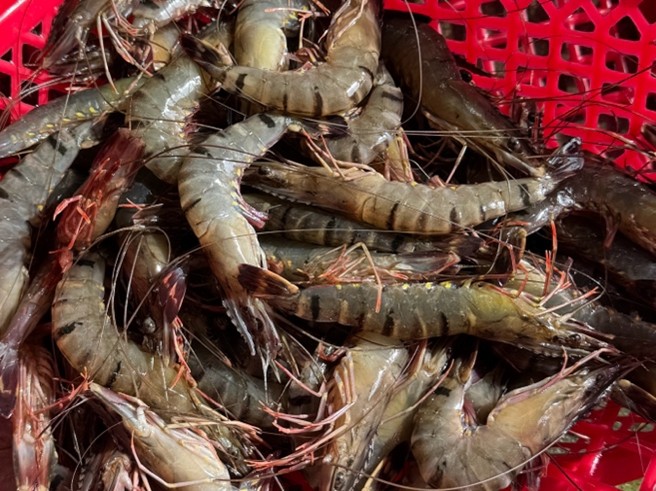
At dawn in the Mekong Delta, the air smells faintly of brine. In Trí Phải Commune, shrimp ponds shimmer around rice paddies, each divided only by narrow mud walls. Here, rice and shrimp share the same soil and water, alternating in rhythm with the seasons: freshwater nourishing rice in the autumn-winter months, brackish tides nurturing shrimp in the spring-summer.
For farming families, this balance between land and sea has long sustained both food and income. “Salinity is good…if not too much,” one farmer laughs when asked what it meant to them. That delicate balance between salt and fresh has always defined life here; but climate change is tipping the scales.
A delta under pressure
The Mekong delta is Vietnam’s rice bowl, supplying half of the nation’s rice and most of its shrimp exports. Yet its low elevation makes it one of the world’s most climate-vulnerable regions. Rising seas, land subsidence, and upstream dams push saltwater ever further inland, threatening the delicate rhythm of alternating rice and shrimp seasons. In Cà Mau Province, the delta’s southern tip, salinity intrusion has become both a curse and a necessity. Without enough salt, shrimp will not grow; with too much, rice withers. This brackish tension has become the new normal for thousands of smallholder families who depend on both crops to survive.
Data meets depth
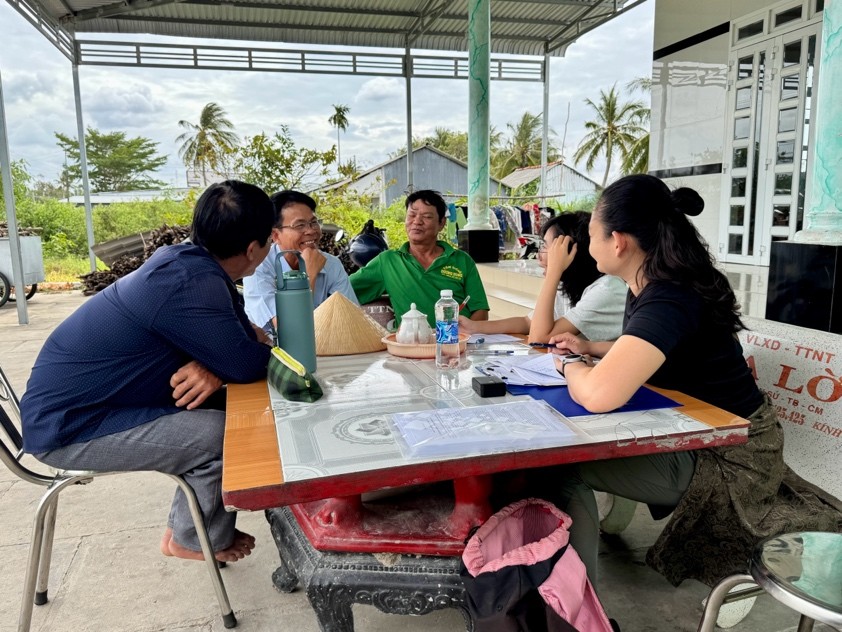
This research was co-created with 34 men and women rice-shrimp farmers in Trí Phải Commune. Using in-depth interviews and grounded-theory analysis, the study explored how gender shapes their perceptions of food security amid the creeping salinity. Rather than measuring calories or yields, the question to them was: How do you know your family is food-secure?
The answers revealed a rich mosaic of meanings. Men often spoke in economic terms—inputs, prices, and yields. Women framed security around meals, safety, and trust. Both recognized the risks that saltwater brings, yet they experienced those risks differently, filtered through their daily responsibilities and societal expectations.
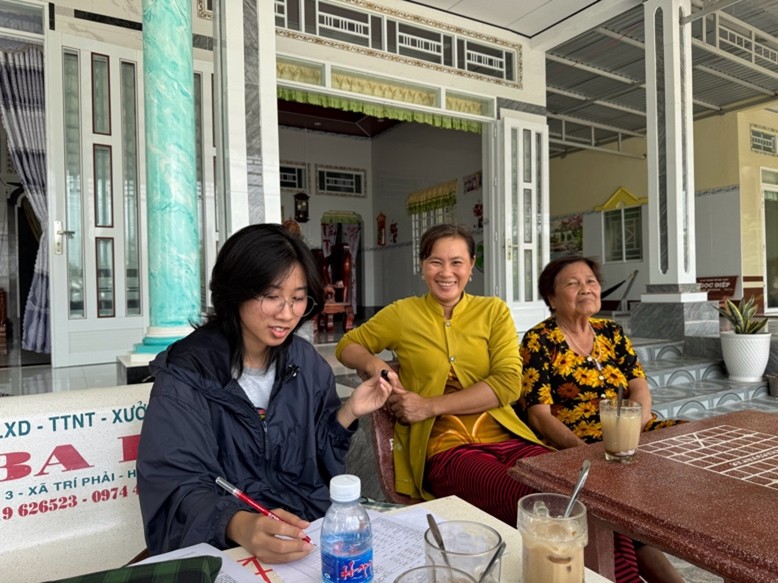
For many men, food security begins in the fields and markets. They worry about production costs and fluctuating shrimp prices. Their sense of stability depends on harvest outcomes and the cash these generate.
Women, meanwhile, describe food security through the rhythm of the kitchen. It’s the certainty of a full meal, the safety of knowing the food’s origin, the satisfaction of feeding children from one’s own land. “When my family eats enough, eats healthy, and they compliment my cooking, that what makes me happy,” one woman shared.
These contrasting views shows two faces of the same coin: men’s provision and women’s fulfilment. Together they sustain the household, yet the subconscious cognitive burden of the day-to-day meal planning and preparation fall most heavily on women.
The good, the bad, and the salty
Farmers speak of salt with ambivalence. It sustains their shrimp ponds and promises income; yet too much salt threatens their rice, vegetables, and drinking water. This duality makes brackish waters a fragile ally.
When salinity rises beyond tolerance, dietary diversity declines. Families buy more instead of growing variety. Beyond the physical effects lies an emotional one: the anxiety of slow, often subconscious erosion of the assurances. The familiar landscape – the cycles of wet and dry, rice and shrimp – becomes unpredictable. Salinity intrusion, then, is not just an environmental problem; it erodes the feeling of control that defines food security itself.
Adaptation anchored in lived experiences
Amid shifting tides, adaptation in Trí Phải is quiet but constant. Communities rebuild dykes, change crop calendars, or test salt-tolerant rice varieties. Yet adaptation also happens in within the home: husband and wife discuss, deliberate, decide from “what’s for dinner” to “should we still grow rice next season?” not exclusively, but cooperatively.
These daily acts of care, often invisible in policy reports, are what keep households afloat. Women’s management of food, time, and trust transforms vulnerability into resilience. Recognizing this labour and its embeddedness in intrahousehold decision-making dynamics is crucial for designing climate-smart interventions that do not overlook social realities.
Food security is often framed as a technical issue: produce higher, irrigate better, sell farther. This study’s findings suggest it’s equally a social one. The six-dimensional framework of the High-Level Panel of Experts (availability, access, utilization, stability, agency, and sustainability) becomes tangible here: farmers’ agency lies not only in owning land but in making choices that feel dignified and safe.
When farmers say, “I want to know where my food comes from,” they are asserting agency—the right to trust, to decide, to care. Sustainable adaptation must therefore stabilize both markets and meanings: strengthening infrastructure while empowering the everyday actors who feed their families and everyone else.
A delta in transition
Cà Mau’s farmers are used to change. They have shifted from rice to shrimp, from freshwater to brackish, and now navigate administrative and climatic tides alike. Their stories show that resilience is not just about surviving floods or droughts: it is about preserving identity in a landscape that’s constantly rewriting itself.
Looking forward
As climate pressures intensify, the future of Vietnam’s rice-shrimp farming systems will depend on how well adaptation policies integrate technical and gender-inclusive approaches. Equality and ecological resilience are not parallel goals, but intertwined pathways to a sustainable future.
These farmers’ experiences reveal that food security is not a fixed condition but a living process, shaped by water levels, household dynamics, and the quiet determination to endure under uncertainty. Food security, in this sense, is not merely a goal. It’s a practice repeated daily: of empathy, courage, and negotiation.
The story of Ca Mau is not just about Vietnam; it’s a microcosm of global adaptation struggles, from voices often unheard, a mirror reflecting how communities everywhere redefine security, resilience, and hope under changing climates. Sustainable food security should simply constitute the capacity to adapt, with dignity.
About the author
Guada Babilonia is a recent graduate of the International Master of Science in Rural Development (IMRD), made possible through a VLIR-UOS scholarship. Her thesis, “Brackish Boundaries, Changing Currents,” explored how gender shapes the meaning of food security in Vietnam’s rice-shrimp farming communities. Now back in the Philippines, she is taking time to explore where her work might grow next: somewhere at the intersection of sustainability, social justice, and storytelling. Trained as an agriculturist but restless by nature, she hopes to help build food systems where sustainability tastes good, equity feels ordinary, and everyone has a reason to care about what’s on their plate.